Sprechen Sie direkt mit unseren Entscheidungsträgern
BOLIN Gen-Parts wurde gegründet, um globale B2B-Einkäufer mit zuverlässigen Produktionskapazitäten, bewährter kommerzieller Reichweite und einer exportfähigen Lieferkraft zu unterstützen. Mit einem Unternehmens- und Werksteam von mehr als 200 Mitarbeitern verfügen wir über die personellen Ressourcen und die operativen Kapazitäten, um die Beschaffung von Generatorenteilen, die technische Kommunikation, die Auftragskoordination und langfristige Großhandelskooperationen abzuwickeln.
Unsere geschäftliche Größe spiegelt sich in einem Umsatz von über 10 Millionen US-Dollar wider, was eine stabile Marktnachfrage und eine vertrauenswürdige Geschäftsentwicklung belegt. Gestützt auf unsere Kernwerke für Motoren, Gleichrichter und AVR-Regler unterstützen wir unsere Kunden bei der Beschaffung wichtiger Generatorkomponenten und bieten dabei ein ausgewogenes Verhältnis zwischen Qualität, Preis und Lieferunterstützung.
Leitfaden zu den Schutzklassen für Generatorkomponenten – für Einkäufer
Ich habe tatsächlich schon oft erlebt, dass sich viele Generatorkunden Gedanken über das Design der Steuerung, das Display, die AMF-Logik, die ATS-Funktion und den Schaltplan machen, während sie das Gerät selbst als eine Art “Stahl-Nebenprodukt” betrachten, das lediglich „für den Außenbereich geeignet aussehen“ muss. Genau so schützt ein $90-Gehäuse letztendlich ein $300–$900-Steuerungssystem vor Regen, salzhaltiger Luft, Schmutz, Dieselabgasen, UV-Strahlung, Insektennestern und Vibrationen.
Was könnte schon schiefgehen?
Die ehrliche Antwort: jede Menge. Und normalerweise schon am ersten Tag ausverkauft.
NEMA-Schutzarten gibt es, weil elektrische Bauteile nicht nur durch erhebliche Überflutung ausfallen. Sie fallen aus aufgrund von Kondenswasser um 3 Uhr morgens, durch vom Wind verwehten Staub, eine Dichtung, die ein Mal zu oft zusammengedrückt wurde, eine verkehrt herum montierte Kabelverschraubung, eine kostengünstige Verbindung, die einen Kapillarweg freigibt, oder ein “wetterfest”-Etikett, das ohne eine geprüfte Einstufung dahinter praktisch nichts aussagt.
Für Käufer von Generatorenkomponenten ist der Raum keine Produktverpackung. Er ist Teil des Zuverlässigkeitssystems.
Warum Käufer von Generatoren die NEMA-Leistungsklassen falsch interpretieren
Die NEMA-Schutzklassen definieren den Schutzgrad, für den ein Schaltschrank ausgelegt ist, um bestimmten Umwelteinflüssen wie herabfallendem Staub, Regen, Graupel, Schnee, vom Wind verwehtem Staub, Spritzwasser, mit einem Schlauch gerichtetem Wasser, Rost und Eisbildung standzuhalten.
Das sieht auf den ersten Blick gut aus. Ist es aber nicht.
Hier ist die unangenehme Wahrheit: Viele Käufer betrachten NEMA 3R, NEMA 4, NEMA 4X, IP54, IP65 und IP66 wie eine Leiter. Je höher die Zahl, desto besser das Gehäuse. Das ist eine faule Kaufentscheidung. Manchmal ist es eine teure Anschaffung.
Ein Gerät der Schutzklasse NEMA 3R kann für einen geschützten Generator-Schaltkasten im Außenbereich durchaus sinnvoll sein, bei dem vor allem Regen und Graupel eine Rolle spielen. Es ist jedoch nicht mit NEMA 4X zu vergleichen, das für rauere Bedingungen wie vom Wind verwehten Schmutz, Spritzwasser, direkt aus einem Schlauch gerichteten Wasserstrahl und Rostbeständigkeit ausgelegt ist. Anders ausgedrückt: NEMA 3R mag den Regen überstehen; NEMA 4X kommt mir erst in den Sinn, wenn an der Anlage salzhaltige Luft, Abwaschungen, chemischer Dunst, Küstenfeuchtigkeit oder ein Servicetechniker mit einer Spritzpistole im Spiel sind.
Der Generator versteht die Formulierung Ihrer Bestellung nicht.
Es schätzt die Aufmerksamkeit.
NEMA- und IP-Schutzklassen: Hören Sie auf, sie wie Währungen umzurechnen
Die IP-Schutzarten basieren auf dem System der Norm IEC 60529. Die erste Ziffer gibt den Schutz vor festen Fremdkörpern und Staub an. Die zweite Ziffer gibt den Schutz vor Wasser an. IP65 steht beispielsweise in der Regel für Staubdichtigkeit und Beständigkeit gegen Wasserstrahlen. IP66 erweitert diese Wasserbeständigkeit auf stärkere Wasserstrahlen.
Nützlich? Ja.
Mit NEMA vergleichbar? Nicht so einfach.
Die NEMA-Raumklassifizierungen umfassen in der Regel ökologische Tests und Annahmen zu Anwendungsfällen, die in den IP-Klassifizierungen nicht vollständig berücksichtigt werden, darunter Korrosionsverhalten und Überlaufprobleme, je nach Typ. Aus diesem Grund halte ich nichts von einzeiligen Umrechnungstabellen. Sie sind zwar praktisch für Verkaufswebseiten, aber gefährlich für Entscheidungen vor Ort.
Wenn ein Anbieter Ihnen mitteilt: “Es entspricht IP65, also im Grunde NEMA 4X”, sollten Sie einen Moment innehalten. Erkundigen Sie sich nach dem Produkt, dem Dichtungstyp, der Zertifizierungsgrundlage, der Art der Dichtung, der Anpresskraft, dem Kabelverschraubungsplan und danach, ob das Gehäuse nach der Prüfung modifiziert wurde. Der letzte Punkt ist entscheidend. Ein Gehäuse mit perfekter Einstufung kann durch eine einzige unansehnliche Öffnung zunichte gemacht werden.
Die Auswahlliste des Käufers: Welche Priorität haben Generatorkomponenten?
Viele Kunden, die Teile für Generatoren kaufen, erwerben keine abstrakten Schaltkästen. Sie schützen vielmehr bestimmte Komponenten: Steuergeräte für Dieselgeneratoren, AMF-Komponenten, ATS-Steuergeräte, Messgeräte, Relais, Gleichstromanschlüsse, Batterieladegeräte, Alarmanlagen, Tasten und Kabelbaumanschlüsse.
Das verändert die Entscheidung.
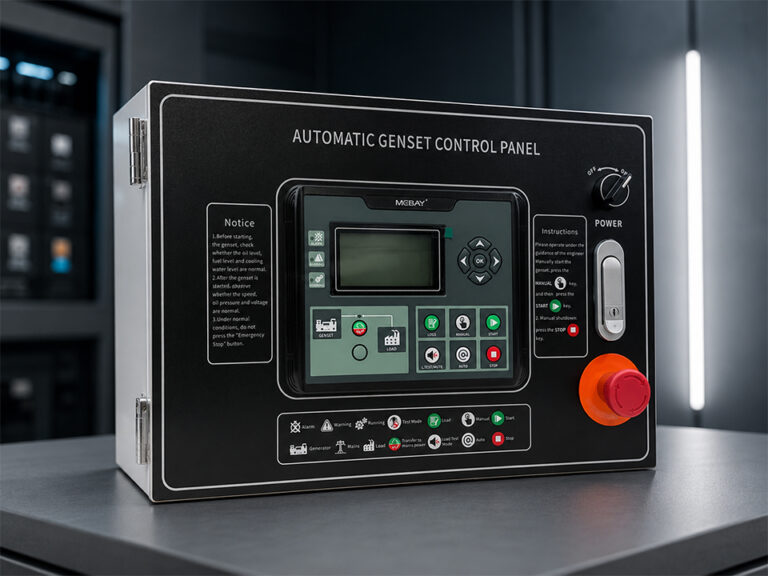
Für eine Ersatzsteuerung gilt: a Schalttafel für den Generator mit Messgerät sollte nicht nur anhand der Anordnung der Module beurteilt werden, sondern auch danach, wo es tatsächlich aufgestellt wird: im Innenbereich für Pflanzen, unter einem überdachten Vordach, auf einem offenen Hof, in einem Container-Aggregat, auf einer Baustelle am Meer, auf einem Telekommunikationsmast, in einer Pumpstation auf einer Ranch oder auf einer temporären Bau Baustelle.
Bei der Aufrüstung auf digitale Steuerungen wird das Problem mit dem Gerät noch deutlicher. A DSE4610/4620 – Steuerung für Dieselgeneratoren mit automatischem Start Es mag zwar den elektrischen Anforderungen entsprechen, doch seine Lebensdauer hängt stark vom Zwischenstück des Schaltkastens, den Dichtungssitzen, der Kondensationskontrolle und davon ab, ob die Kabeldurchführungen korrekt abgedichtet sind.
Ein kleines Leck. Hohe Kosten.
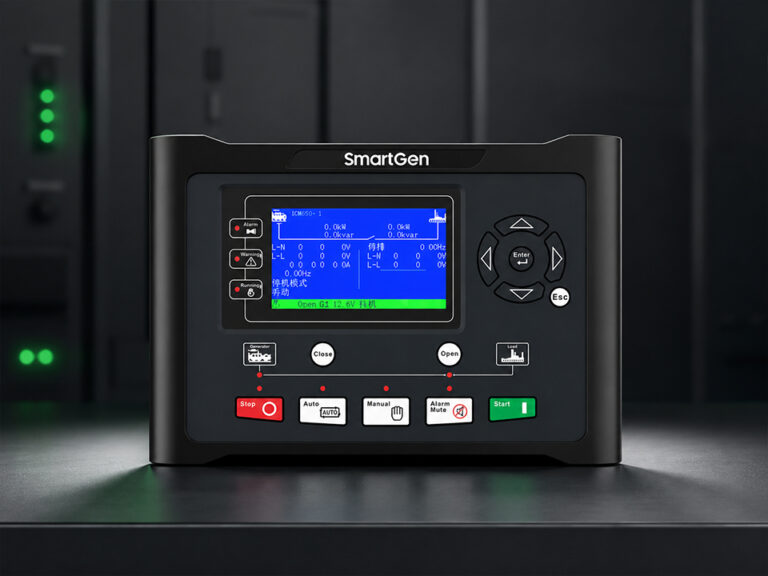
Genau das gilt auch für AMF-Systeme. A DSE7220 AMF-Generator-Modul für die Steuerung des automatischen Starts wird häufig wegen seiner Standby-Zuverlässigkeit gekauft. Doch die Standby-Zuverlässigkeit ist eine bittere Ironie: Das Gerät steht möglicherweise monatelang unbeachtet herum, sammelt still und leise Feuchtigkeit an, und dann soll es bei einem Stromausfall durch einen Tornado einwandfrei funktionieren.
Das ist kein Konzept. Genau so werden Backup-Systeme angreifbar.
NEMA 3R vs. 4X: Der Vergleich, der den Kunden wirklich am Herzen liegt
Eines der häufigsten Argumente in der Praxis ist die Wahl zwischen Geräten der Schutzklassen NEMA 3R und 4X.
NEMA 3R ist in der Regel die sinnvollste Wahl für den Außenbereich, wenn das Gehäuse Schutz vor Regen, Graupel, Schnee und äußerer Eisbildung bieten muss, der Einsatzort jedoch nicht durch Abwasch, starken, vom Wind verwehten Schmutz, Salznebel oder aggressive Stoffe beeinträchtigt wird. Diese Schutzklasse ist weit verbreitet, kostengünstig und oft ausreichend.
NEMA 4X ist die Schutzklasse, bei der man “hier nicht sparen sollte”, wenn das Gehäuse Korrosion und direktem Wasserkontakt ausgesetzt ist. Standorte an der Küste. Gelände in Meeresnähe. Chemiewerke. Nassbereiche in der Lebensmittelverarbeitung. Abwasseranlagen. Bergbauausrüstung. Schmutzige, heiße Standorte, an denen die Schränke noch mit dem Schlauch gereinigt werden. Ich würde es vorziehen, wenn Käufer hier lieber überdimensionierte Modelle wählen, anstatt zu glauben, ein Schnäppchen-Schrank sei eine kluge Entscheidung.
Das Schlimme daran? Viele Fehler sehen nicht wie Bewertungsfehler aus. Sie wirken wie Controller-Fehler.
Ein Bildschirm beschlägt. Ein Relais klappert. Eine unheilbare Blockade macht dem umweltfreundlichen Betrieb ein Ende. Der Generator weigert sich, automatisch zu starten. Der Fachmann tauscht die Steuerung aus, stellt dem Kunden eine Rechnung, und niemand fragt, ob das Gehäuse von Anfang an fehlerhaft war.
Vergleichstabelle: NEMA- und IP-Klassifizierungen für Generatorkomponenten
Punktzahl/Typ
Ideal für Käufer von Generatoren
Wofür es gut geeignet ist
Wofür ich mich nicht darauf verlassen würde
NEMA 1
Generatorräume im Innenbereich
Grundlegende Sicherheit bei Call-Optionen und fallender Schmutz
Einsatz im Außenbereich, Feuchtigkeit, Abwaschen, Regen
NEMA 3R
Im Freien aufgestellte Notstromaggregate, die regelmäßig direktem Regen ausgesetzt sind
Regen, Graupel, Schnee, Eis im Freien
Rohrspülung, salzhaltige Luft, starke Verschmutzung, stark korrosionsgefährdete Standorte
NEMA 4
Websites zum Thema Feuchtigkeit im Außen- oder Innenbereich
Vom Wind aufgewirbelter Staub, Regen, Spritzwasser, aus einem Schlauch strömendes Wasser
Raue Umgebungsbedingungen, sofern das Produkt dies nicht unterstützt
NEMA 4X
Standorte in Küstengebieten, im gewerblichen Bereich, mit Hochdruckreinigung, mit Abwasseranfall sowie in der chemienahen Industrie
Direkte Wassereinwirkung und Beständigkeit gegen Alterung
Unterwasser, sofern nicht individuell eingestuft
IP54
Sicherheit für kleine Gewerbebetriebe
Nur wenig Schmutz und verschüttetes Wasser
Offene Generatorhöfe im Freien mit extremer direkter Witterungseinwirkung
IP65
Staubdichte Außenschränke
Staub und Wasserstrahlen
Hochdruckreinigung oder Eintauchen
IP66
Starker Schmutz von außen und stärkere Wasserstrahlen
Staubdichte Abdichtung und stärkere Belastung durch Wasserstrahl
Verschleiß, sofern Material und Beschichtung nicht auf die Einsatzbedingungen abgestimmt sind
IP67
Umstände vorübergehender Eintauchung
Kurzzeitiges Eintauchen unter festgelegten Bedingungen
Schlauchstrahlrohre, sofern sie nicht für beide Einsatzbedingungen zugelassen oder geprüft sind
Bei den Produkten geht es um mehr als nur den Aufkleber
Die NEMA-Raumklassifizierungen geben Auskunft über die geprüfte Schutzklasse. Sie beseitigen jedoch nicht – so erstaunlich es auch klingen mag – die Schwachstellen des Materials.
Farbiger Kohlenstoffstahl kann unter kontrollierten Außenbedingungen sinnvoll sein, insbesondere wenn die Kosten eine Rolle spielen und die Korrosionsgefahr moderat ist. Edelstahl ist die bessere Wahl, wenn Korrosion der Feind ist. Edelstahl 304 ist weit verbreitet, doch in der Nähe von Salz, Chloriden und aggressiver Industrieabluft bevorzuge ich Edelstahl 316. Glasfaserverstärkter Polyester kann ebenfalls in rauen Umgebungen robust sein, allerdings müssen Käufer die UV-Beständigkeit, die Anforderungen an die Stoßfestigkeit, die Erdungsstrategie und die Wärmeentwicklung prüfen.
Probleme mit der Heizung.
Ein dicht verschlossener Raum speichert Wärme, und Generatorsteuerungen befinden sich derzeit in der Nähe von heißen Motoren, Generatoren, Ladegeräten und sonnenverbrannten Abdeckplatten. Daher ist die “beste Raumlösung für Außengeneratoren” nicht immer der dichteste Kasten, den man für Geld kaufen kann. Oft führt ein vollständig verschlossener Schrank mit schlechter thermischer Planung zu Kondensationszyklen und Problemen mit der Elektronik. Sie benötigen die richtige Schutzart, das ideale Material, ein optimales Entwässerungskonzept und die beste Installation.
Nicht extravagant. Notwendig.
Die Generatorsteuerung ist genauso geschützt wie der Schutzschalter
Ein in einem Schaltschrank montiertes Steuergerät kann auf dem Papier zwar gute Werte aufweisen, sich aber letztendlich als Schwachstelle erweisen.
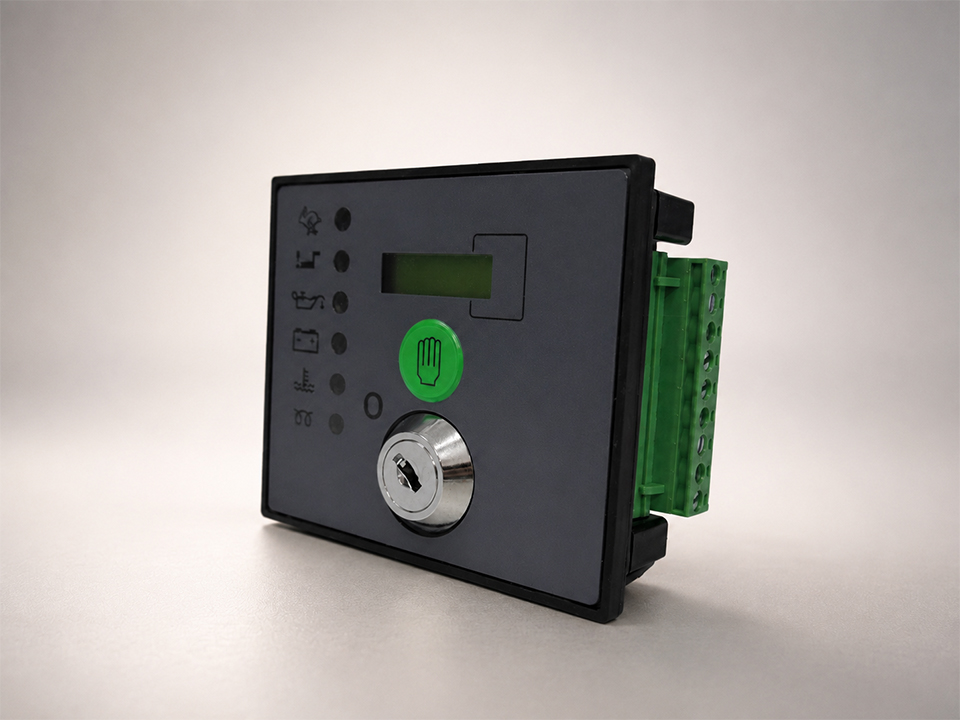
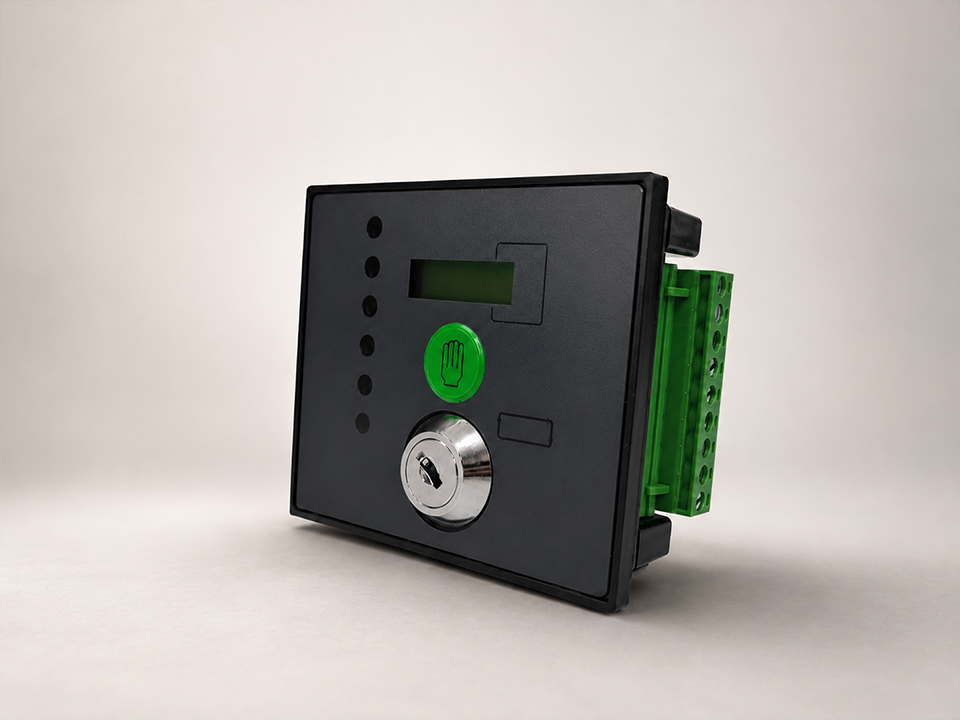
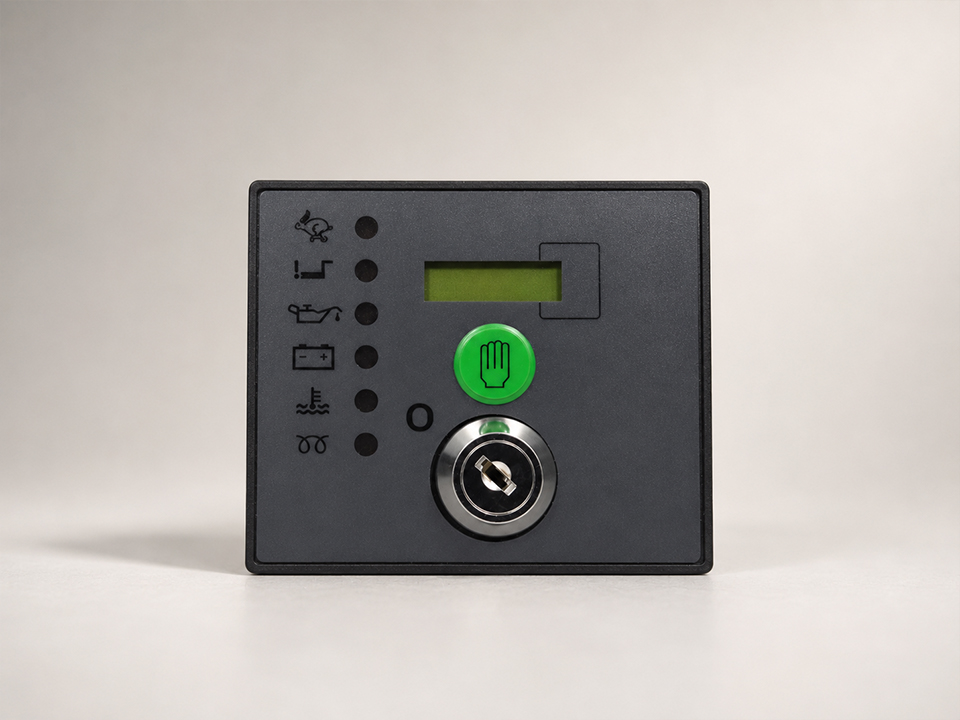
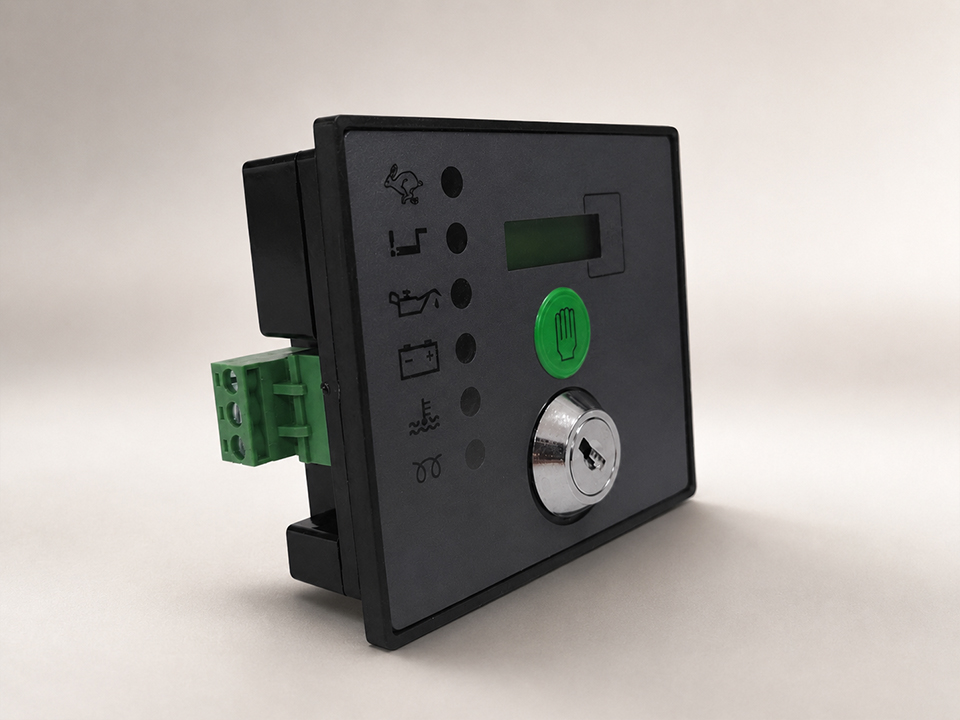
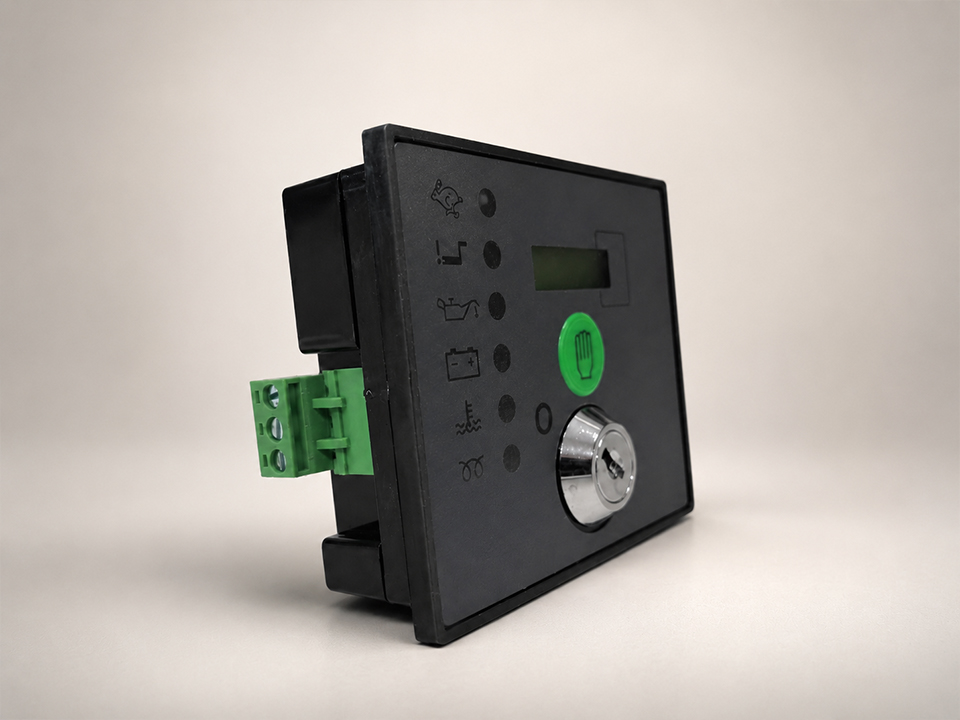
Wenn Sie ein DSE501K-Steuerungsset für Dieselgeneratoren mit Schlüsselstart, die Anpresskraft der Dichtung an der Vorderseite spielt eine Rolle. Ebenso wie die Plattendicke. Und auch, ob der Monteur eine Kante zu fest anzieht und eine andere Ecke zu locker lässt. Eine billige Verarbeitung kann ein gutes Bauteil zunichte machen.
Genau dieselbe Warnung gilt für Autostart-Systeme wie das DC20D-Steuerung für Dieselgeneratoren mit Start-Stopp-Funktion für Kraftfahrzeuge. Die Autostart-Logik basiert auf Niederspannungssignalen, die gegenüber Rost sehr empfindlich sind. Ein defektes Gerät muss nicht unbedingt die Steuerung überfluten. Es reicht bereits aus, wenn es genügend Feuchtigkeit erzeugt, um die Anschlüsse zu oxidieren und die Signale zu stören.
Und wenn dann noch die ATS-Logik ins Spiel kommt, steigt der Einsatz erneut. A DSE7220 ATS-Steuerung mit automatischem Start für Dieselgeneratoren ist Teil der Kette, die darüber entscheidet, wie die Stromübertragung bei einem Ausfall der Stromversorgung erfolgt. Der Schutz dieses Steuerungspfads ist keine reine Formsache. Es handelt sich um funktionales Risikomanagement.
Die Gegebenheiten vor Ort sind immer ausschlaggebender als der Wortlaut einer Broschüre
Stellen Sie diese Fragen, bevor Sie das Gehäuse oder die Generatorsteuerplatine erwerben:
Wird der Schrank direktem Regen ausgesetzt sein oder vor Nieselregen geschützt sein?
Handelt es sich bei dem Standort um ein Küstengebiet, ein Chemiegelände, eine landwirtschaftliche Fläche, ein verschmutztes Gelände oder ein saniertes Gelände?
Werden die Servicetechniker nach der Verteilung zusätzliche Öffnungen bohren?
Sind die Kabeldurchführungen entsprechend dem Gerät ausgewählt und installiert?
Wird die Sonne den Schrank so stark erwärmen, dass die Temperatur der darin befindlichen Elektronikgeräte zu hoch wird?
Gibt es einen Kondensatablauf, eine Ablage, einen Abfluss, eine Heizungsanlage oder eine Trockenmittelvorrichtung?
Können Schädlinge, Nagetiere und Lehmwespen ins Haus gelangen?
Werden die Bediener den Generator während der Reinigung abspritzen?
Einfache Probleme. Teure Lösungen.
An dieser Stelle werde ich etwas kategorisch: Kunden, die Generatorkomponenten kaufen, sollten aufhören zu fragen: “Ist es wasserdicht?” Dieser Begriff ist zu vage. Fragen Sie stattdessen nach NEMA-Gehäuseklassen, IP-Schutzarten, Produktdetails, Dichtungsausführung, Zulassungsgrundlagen und Installationsbeschränkungen. Passen Sie das Gehäuse dann an den tatsächlichen Einsatzort an – und nicht an die im Angebot beschriebene Fantasieversion des Einsatzortes.
Meine Faustregel für die Auswahl von Gehäusen für Generatorkomponenten im Außenbereich
Für vollständig trockene Generatorräume im Innenbereich könnte ein NEMA-1-Schaltkasten oder ein gleichwertiger Schaltkasten für den Innenbereich geeignet sein.
Was den grundlegenden Einsatz von Notstromaggregaten im Außenbereich angeht, gehe ich zunächst von der Schutzklasse NEMA 3R aus und wähle eine höhere Schutzklasse, wenn die Umgebungsbedingungen dies erfordern.
Bei starken Regenfällen sowie durch Wind aufgewirbeltem Staub oder bei der Rohrreinigung prüfe ich je nach Markt und Dokumentation, ob eine Schutzart nach NEMA 4 oder IP65/IP66 erforderlich ist.
Für Standorte in Küstengebieten, in korrosiven Umgebungen, in der Abwasserwirtschaft, in der Schifffahrt, in der chemischen Industrie oder im Düngemittelbereich wünsche ich mir Produkte, die der Schutzklasse NEMA 4X entsprechen und korrosionsbeständig sind. Nicht nur ein Aufkleber. Sondern echtes Material.
Bei Steuerungen, die an schwingenden Stromaggregaten angebracht sind, überprüfe ich die Dichtungspressung, die Qualität der Dichtungen, die Zugentlastung der Kabel und die Befestigung der Aussparungen in der Verkleidung, bevor ich mich von irgendwelchen Nennwerten beeindrucken lasse.
Nicht die Verpackung ist der Held, sondern das Aufbausystem.
Typische Fehler, die zum Ausfall von Generatorsteuerungen führen
Der allererste Fehler besteht darin, eine zertifizierte Einheit zu kaufen und anschließend nicht zertifizierte Öffnungen direkt darin anzubringen. Jeder Kabelfernzugang sollte die Sicherheitsvorschriften einhalten. Eine lockere Kabelverschraubung ist kein kleines Detail, sondern eine Fehlerquelle.
Der zweite Fehler besteht darin, Kondenswasser zu ignorieren. Generatorschränke im Außenbereich dehnen sich bei steigenden und fallenden Temperaturen aus. Feuchte Luft dringt ein, kühlt ab, kondensiert und kommt mit den Bauteilen in Kontakt. In feuchten Regionen kann dies sogar schlimmere Folgen haben als sichtbarer Regen.
Der dritte Fehler besteht darin, NEMA 3R an einem Standort einzusetzen, der den Anforderungen von NEMA 4X entspricht. Ein Schuppen für landwirtschaftliche Chemikalien, ein Telekommunikationsstandort am Meer oder eine Abwasserhebeanlage sind nicht “einfach nur im Freien”. Es handelt sich um chemisch und mechanisch aggressive Umgebungen.
Der vierte Fehler besteht darin, zu glauben, dass der Markenname des Reglers ein minderwertiges Gerät ausgleichen kann. Das ist nicht der Fall. Auch ein besseres Modul benötigt eine absolut trockene und stabile elektrische Umgebung.
FAQ: Umweltbewertungen für Käufer von Generatorenteilen
Welche Raumklasse müssen Generatorkomponenten erfüllen?
Generatorbauteile erfordern in der Regel eine Schutzart, die auf die jeweiligen Umgebungsbedingungen abgestimmt ist. Dabei eignet sich NEMA 3R in der Regel ideal für den Standard-Regen-Schutz im Außenbereich, während NEMA 4 oder 4X bei Staub durch Wind, mit einem Schlauch gerichtetem Wasser, Rost, salzhaltiger Luft, chemischer Belastung oder in Umgebungen mit Hochdruckreinigung rund um Dieselgeneratoranlagen bevorzugt wird. Die richtige Lösung hängt vom Standort, dem Produkt, dem Zugang zu Kabeln und den Wartungsgewohnheiten ab.
Für einen geschützten Notstromgenerator könnte NEMA 3R ausreichen. Bei einem Generator am Meer würde ich NEMA 4X mit Edelstahl oder einem weiteren korrosionsbeständigen Material dringend in Betracht ziehen. Bei Einsatz in schmutzigen Bau- oder Bergbauumgebungen sollten Staubdichtung und vibrationsfeste Kabelführung noch stärker im Fokus stehen.
Reicht die Schutzart NEMA 3R für Generatoren im Außenbereich aus?
NEMA 3R kann für Generatoren im Außenbereich ausreichend sein, wenn das Gerät hauptsächlich Regen, Graupel, Schnee und Eisbildung im Freien ausgesetzt ist; es ist jedoch nicht die Schutzklasse, die ich für die Reinigung mit einem Wasserschlauch, salzhaltige Luft, raue Industrieumgebungen oder ständigen, vom Wind verwehten Staub wählen würde. Es handelt sich um eine funktionale Schutzklasse, nicht um einen umfassenden Schutz.
Kunden geraten in Schwierigkeiten, wenn sie das Wort “Außenbereich” lesen und dann nicht mehr daran glauben. Ein Außenbereich unter einem Dach ist nicht dasselbe wie ein Außenbereich am Meer. Draußen in Arizona, wo es staubig ist, ist es nicht dasselbe wie draußen neben einer Abwasserpumpstation.
Was ist der Unterschied zwischen den Schutzklassen NEMA 3R und NEMA 4X?
NEMA 3R zielt in erster Linie auf den Schutz im Außenbereich vor Regen, Graupel, Schnee und Eisbildung ab, während NEMA 4X einen stärkeren Schutz vor vom Wind verwehtem Schmutz, Spritzwasser, mit einem Schlauch gerichtetem Wasser und Korrosion bietet, was es zur besseren Wahl für raue industrielle Anwendungen, den Einsatz in Küstengebieten, bei Hochdruckreinigung oder in der Nähe von Chemikalien macht. Der Unterschied liegt nicht in der Optik, sondern in der Belastbarkeit gegenüber äußeren Einflüssen.
Meine unverblümte Meinung: Wenn Korrosion oder die Reinigung von Schläuchen zum Einsatzort gehören, ist NEMA 3R meist nur Wunschdenken. NEMA 4X kostet mehr, weil es ein schwerwiegenderes Problem angeht.
Entsprechen die IP-Schutzklassen den NEMA-Schutzklassen?
IP-Schutzklassen sind nicht mit den NEMA-Klassifizierungen gleichzusetzen, da sich die IP-Codes auf den Schutz vor dem Eindringen von Festkörpern und Wasser konzentrieren, während die NEMA-Typen umfassendere Umgebungsbedingungen wie Beständigkeit gegen Alterung, Beschichtung, bauliche Anforderungen und den Anwendungskontext berücksichtigen können. Umrechnungstabellen sind zwar hilfreich, sollten jedoch die Konstruktionsentscheidung nicht beeinflussen.
Die Schutzklassen IP65 und IP66 gelten insbesondere für den weltweiten Einsatz. Fragen Sie dennoch nach, aus welchem Material das Gehäuse besteht, wie es geprüft wurde und ob bei Modifikationen die angegebene Schutzklasse weiterhin gewährleistet ist.
Welche Schutzart ist für Generatoren im Außenbereich am besten geeignet?
Die optimale Schutzart für Außengeneratoren ist die niedrigste Schutzart, die der tatsächlichen Beanspruchung ehrlich entspricht. Viele Käufer von Notstrom- und Industrieaggregaten sollten jedoch NEMA 3R für normalen Regen, NEMA 4 für Abspritzwasser und vom Wind verwehten Staub sowie NEMA 4X für aggressive Küsten- oder Industrieumgebungen in Betracht ziehen. Eine Überdimensionierung verschwendet Geld; eine Unterdimensionierung gefährdet die Zuverlässigkeit.
Bei Generatorsteuerungen sind für mich alle Aspekte der Baugruppe von Bedeutung: die Bewertung des Gehäuses, die Dichtung, die Zwischenplatte der Frontblende, die Stopfbuchsen, die Art der Ablaufleitung, der Einbauwinkel, die Resonanz und das Betriebsverhalten. Die Bewertung bildet den Ausgangspunkt für die Diskussion.
Benötigen die Komponenten der Generatorsteuerung einen separaten Wetterschutz?
Steuermodule für Generatoren erfordern einen unterschiedlichen Wetterschutz, wenn sie in Außenverkleidungen, freiliegenden Abdeckklappen, mobilen Generatorrahmen, Pumpstationen, Telekommunikationsstandorten oder an anderen Orten montiert werden, an denen Feuchtigkeit, Schmutz, Vibrationen, Insekten oder korrosive Luft an die Anschlüsse und Leiterplatten gelangen können. Eine Steuerungsfrontplatte allein schützt nicht das gesamte Verkabelungssystem.
Schauen Sie sich nicht nur das Display auf der Vorderseite an. Werfen Sie einen Blick hinter die Blende. Dort wirken Wasser, Korrosion, lockere Anschlüsse und Kondenswasser unbemerkt.
Wähle den Raum aus, bevor der Versager ihn für dich auswählt
Ein Generator-Kunde, der sich mit NEMA-Einheiten auskennt, kauft weniger Ersatzgeräte für Notfälle.
Das ist der entscheidende Punkt.
Bevor Sie eine Generator-Steuerung, ein AMF-Modul, eine ATS-Steuerung, einen Schaltkasten oder einen Schalttafel-Bausatz kaufen, sollten Sie sich überlegen, wo die Geräte untergebracht werden sollen und welchen Einflüssen sie dort ausgesetzt sein werden. Regen ist dabei offensichtlich. Salz, Schmutz, Wärme, Kondenswasser, Vibrationen und eine unsachgemäße Installation sind hingegen heimtückischer.
Bei Ersatzpanels und Steuerungen beginnen Sie mit der gewünschten Komponente und passen Sie anschließend die Raumaufteilung an die Website an. Prüfen Sie die Optionen von SmartGen Components für Steuerkästen, Autostart-Komponenten, AMF-Steuerungen, Schlüsselstart-Kits und ATS-fähige Dieselgenerator-Steuerungen und wählen Sie anschließend die Schutzstufe aus, die erforderlich ist, damit der Generator auch unter den widrigsten Wetterbedingungen des Jahres zuverlässig funktioniert.